
SHERWIN-WILLIAMS PAINT COLOR
Sherwin-Williams Pearly White SW 7009
Pearly White is a warm off-white, with an undertone that is warm, with a yellow cast. See it at room scale before you buy a tester: try Pearly White on the walls of your own room in the free 3D planner.
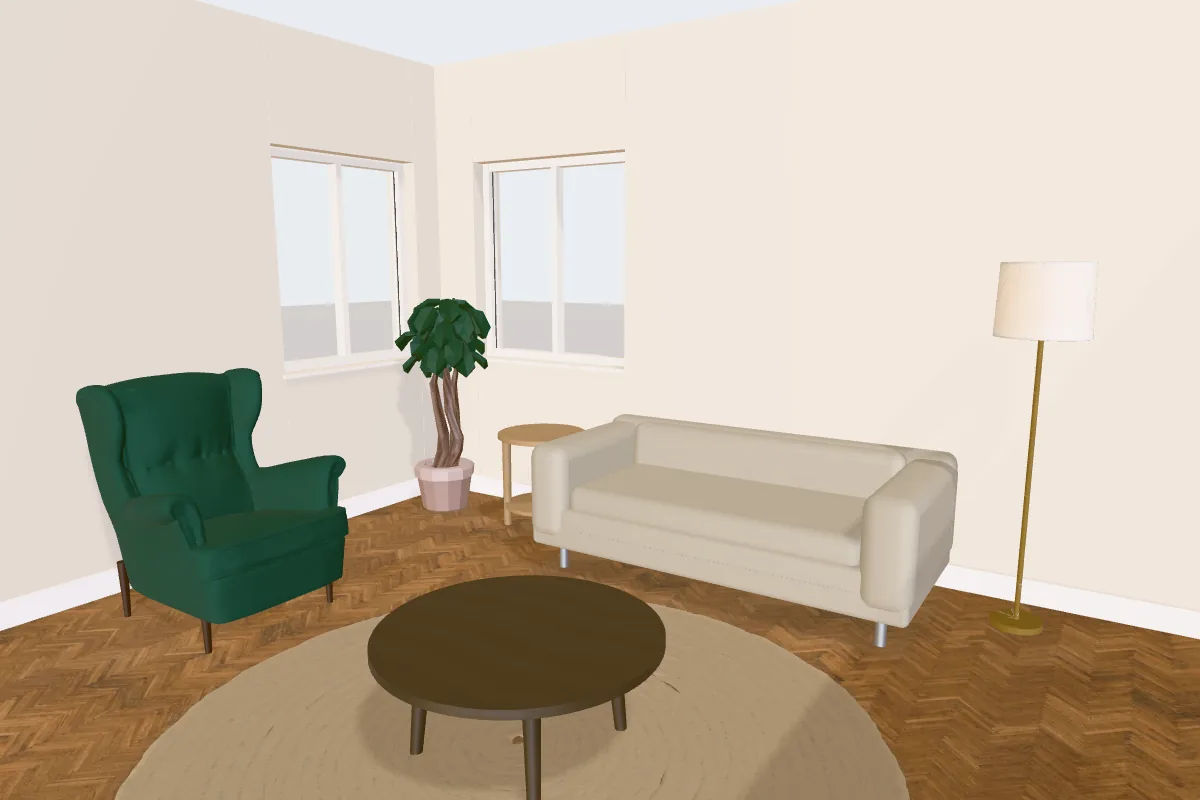
Pearly White at a glance
| Brand | Sherwin-Williams |
| Color name | Pearly White |
| Code | SW 7009 |
| Hex (on screen) | #E8E3D9 |
| RGB | 232, 227, 217 |
| Light reflectance (est.) | About 77 |
| Looks like | Warm off-white |
| Undertone | Warm, with a yellow cast |
| Popularity | The 23rd most searched Sherwin-Williams color in the planner’s library: about 5,200 searches a month in the US |
The hex value is the planner’s on-screen approximation, not a paint formula, and the light reflectance is estimated from it. Screens, daylight, bulbs and sheen all change how a paint looks, so check a physical sample or tester pot on your wall before you order. The official Sherwin-Williams color page has the manufacturer’s own details.
How Pearly White behaves in a room
With an estimated light reflectance of about 77, it bounces back most of the light that reaches it, so it helps small or dim rooms feel brighter and makes a good ceiling or trim color.
Its undertone is warm. Warm colors hold up well in north-facing rooms, where daylight is cooler, and can look richer or more yellow in strong south-facing light.
Where it tends to be used
Whites like this are used on walls, ceilings and woodwork throughout a home, and on cabinets. A white with this undertone keeps a scheme soft and warm.
Try Pearly White in your room. Draw your room to size or open a furnished living room, then paint the walls in 3D. Free, with no sign-up.
Open the planner →Colors that pair with Pearly White
Suggestions from the same Sherwin-Williams range in the planner, chosen for contrast or a tonal match. Try them side by side on different walls before deciding.
Closest matches from other brands
The colors from other brands in the planner that look nearest to Pearly White on screen, measured by color difference (ΔE: under 2.5 is hard to tell apart on screen, over 9 is clearly different). Useful if you like the look but want a different brand or price.
Try Pearly White on your own walls in 3D
- Open the planner and draw your room to its real size, or start from a furnished layout such as the living room or bedroom examples.
- Switch to 3D and open the Design panel, then choose Walls.
- Search for “Pearly White” or “SW 7009”, or filter by brand. Paint the whole room or select a single wall for a feature wall.
The planner is free with no sign-up. Brand paint colors are premium finishes: you can preview Pearly White in your room for free, and Plus keeps brand colors in your saved plan.
More Sherwin-Williams colors
Questions
Is Sherwin-Williams Pearly White warm or cool?
On screen it reads as warm: its undertone is warm, with a yellow cast. Check a sample in your own light, as the direction a room faces changes how warm or cool a color looks.
What is the LRV of Pearly White?
Estimated from the on-screen color, its light reflectance value is about 77 on a scale where 0 is black and 100 is pure white. The manufacturer’s published LRV is measured from real paint and may differ slightly.
What is the closest match to Pearly White from another brand?
In the planner’s library, the nearest on screen is Benjamin Moore China White (OC-141). On-screen matches are a starting point only: compare real samples side by side before switching.