Kitchen Island Dimensions, Spacing & Layout Ideas: Plan It Right Before You Build
TL;DR: A kitchen island only works if the numbers stack up. You need at least 900mm / 36in of clear walkway on every side, a minimum island length of 1,200mm / 47in, and your feature decisions (seating, sink, hob) locked in before you finalise dimensions. Use the free room planner below to draw your kitchen to scale and check all of this before you talk to a fitter.
A kitchen island is one of those ideas that looks brilliant on a mood board and disastrous in a poorly measured room. The kitchen feels spacious enough — until you stand in it, mime opening the dishwasher, and realise the island would block every single traffic route.
Poor spacing is the number-one reason kitchen islands fail in practice. Not the material, not the style — the spacing. Get the clearances wrong and you create a kitchen that looks great in photos and drives you mad every single day.
This guide covers the exact kitchen island dimensions you need, the clearance rules that most kitchen designers follow, and six layout configurations worth considering — whether your kitchen is a tight galley or a sprawling open-plan extension. At the end, you'll find a free kitchen island layout planner you can use right now, in your browser, with no sign-up and no download.
Why Kitchen Island Layout Planning Matters More Than You Think
Most people decide they want a kitchen island, then start browsing units, finishes, and worktop materials. Planning comes last — or not at all.
That's backwards. And it's expensive.
A kitchen island that's 200mm / 8in too long, or placed 150mm / 6in too close to a run of base units, can cost thousands to correct once cabinets are installed and worktops are cut. Kitchen fitters charge for their time, not your indecision. The more clearly you brief them upfront, the fewer surprises appear on the final invoice.
The Most Common Kitchen Island Mistakes
Based on what kitchen designers and fitters see most often, these are the layout decisions homeowners regret:
- Not leaving enough walkway — squeezing in an island that leaves less than 900mm / 36in on each side, creating a bottleneck
- Forgetting appliance door clearance — placing the island so that the oven, dishwasher, or fridge door can't open fully
- Adding seating as an afterthought — realising too late that the worktop overhang is 50mm / 2in deep instead of the 300mm / 12in you need for a knee to fit
- Not deciding on a sink or hob early — plumbing and extraction routes need to be confirmed before walls are chased or floors are laid
- Misjudging scale — using a tape measure alone, without visualising the full room in proportion
How a Drawn Layout Saves Time and Money
A scaled floor plan, even a rough one drawn in a free browser tool, forces you to confront the real numbers before anything is ordered. It also gives your fitter or kitchen supplier something concrete to respond to — rather than spending the first meeting on basic measuring.
If you're also working through a full renovation, the guide on how to plan a kitchen renovation covers the broader project sequence, including when to bring in a fitter and how to stage the work.
Kitchen Island Dimensions: The Numbers You Need Before You Start
There's no single "correct" island size. But there are ranges that work, and knowing them stops you from ordering something that won't fit.
Standard Island Length and Width
Most kitchen designers recommend a minimum island length of 1,200mm / 47in to make it genuinely useful as a work surface. Anything shorter tends to feel more like an obstacle than a feature.
For width, the standard range is 600–900mm / 24–36in. A 600mm / 24in wide island matches standard base unit depth and is the minimum for useful worktop space. Go to 900mm / 36in if you're adding a sink or hob, or if you want deep storage on both sides.
For seating on one side, a 900mm / 36in width gives you enough surface to work on one side and pull up a stool on the other — just. Many designers prefer 1,050mm / 41in in this configuration.
Worktop Overhang for Seating
This is where a lot of kitchen island layouts fall short. A standard worktop sits flush with the unit below — which leaves no room for knees.
For comfortable bar-style seating, you need an overhang of 300–400mm / 12–16in. That means the worktop or work surface extends 300–400mm beyond the face of the cabinet on the seating side. Factor this into your total island width when measuring available floor space.
For a lower, dining-height seating arrangement, an overhang of 250mm / 10in can work with standard-height chairs — but 300mm / 12in is more comfortable.
Island Height: Standard vs Bar Height
Standard kitchen worktop height is 900mm / 36in from the floor. Most kitchen islands match this, which works well if the island doubles as a preparation area.
Bar-height islands sit at 1,050–1,100mm / 41–43in and pair with bar stools. They create a visual break in open-plan spaces and feel more casual, but they're less practical as a cooking prep surface.
If you want the island to serve both purposes, some homeowners opt for a split-level island — a 900mm / 36in preparation zone on one side and a raised 1,050mm / 41in seating bar on the other. This requires more floor space but solves the height compromise neatly.
Minimum Clearance Rules: How Much Space Do You Actually Need?
This is the section most planning guides skip. Don't skip it.
The walkway gap around your island determines whether the kitchen actually functions. Too tight, and two people can't work in the kitchen at the same time. Too narrow at an appliance, and you physically cannot open the door.
One-Cook vs Two-Cook Kitchens
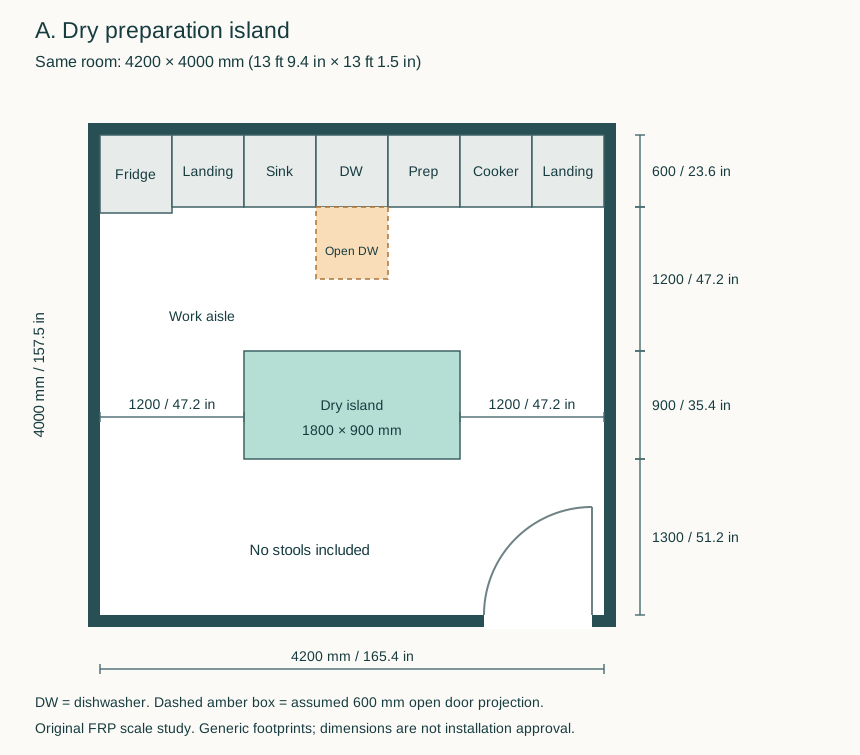
For a single-cook kitchen, most kitchen designers recommend a minimum clearance of 900mm / 36in between the island edge and any surrounding cabinetry or wall. This is a working minimum — comfortable, but not generous.
For a two-cook kitchen — or any household where multiple people are regularly in the space at once — 1,050–1,200mm / 41–47in is the preferred range. This allows two adults to pass each other without turning sideways.
If you're planning for wheelchair access or future-proofing the space, most accessibility guidance suggests 1,500mm / 59in of clear turning space, which typically means a larger kitchen footprint before an island becomes viable.
Clearance at Appliance Doors
Appliance doors need their own clearance calculation — separate from walkway clearance.
- Dishwasher: needs the full door to drop flat without hitting the island. Measure the door length when open (typically 550–600mm / 22–24in), then add at least 150mm / 6in for standing room.
- Oven: the door opens toward you, so the gap between oven and island needs to be at least 750mm / 30in — ideally 900mm / 36in.
- Fridge door: depends on the hinge side and model. French-door and American-style fridges need more clearance than single-door units.
Map appliance positions on your floor plan before finalising island placement. It's the kind of thing that's obvious in a drawing and invisible until it's too late.
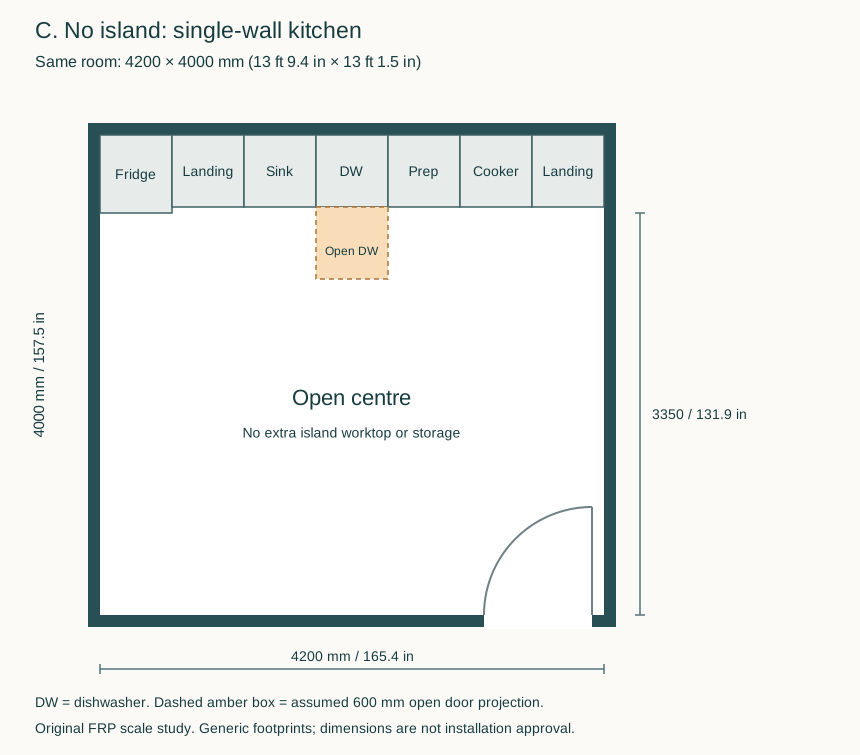
When Your Kitchen Is Too Small for an Island
If you can't maintain 900mm / 36in of clearance on at least two sides and 750mm / 30in on the others, a fixed island is probably not the right call.
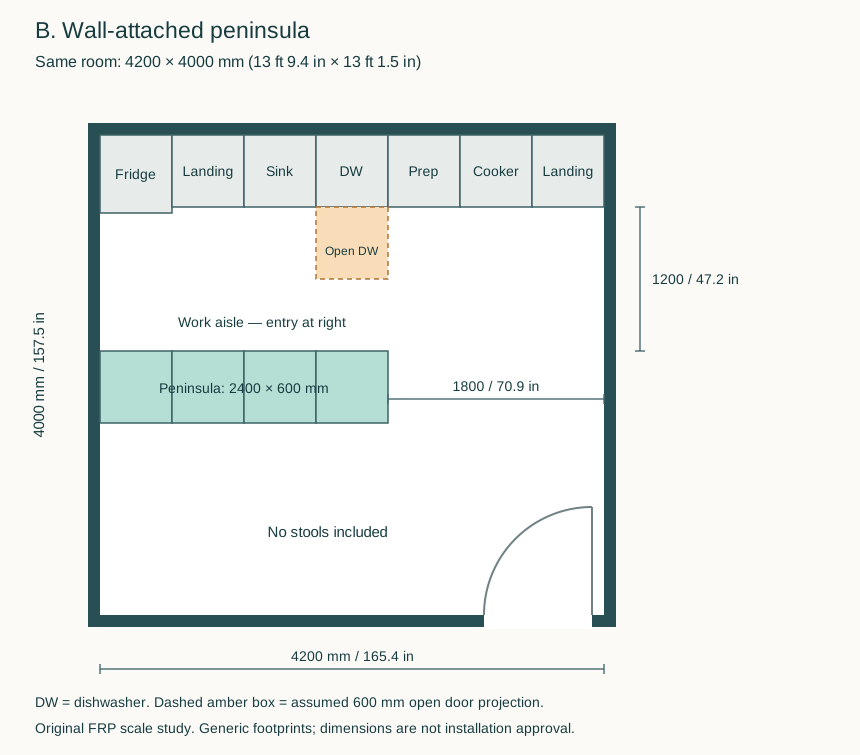
For smaller kitchens, consider a rolling island (covered below) or a peninsula — a worktop that extends from the wall or existing cabinetry, requiring clearance on only three sides instead of four.
The guide on room layout ideas for small spaces has more on working with tight footprints where every centimetre counts.
Kitchen Island Layout Ideas: Six Shapes and Configurations to Consider
The right island configuration depends on your kitchen shape, how you cook, and what you want the island to do. Here are six practical kitchen island layout ideas, each with the room size they work best in.
Single-Run Island (the Classic)
A freestanding rectangular island centred in the kitchen, with walkway space on all four sides. Works best in kitchens that are at least 3,600mm / 12ft wide to maintain safe clearances. Simple to build, easy to seat, and the most flexible for layout planning.
Galley Kitchen With an Island
A galley kitchen — two parallel runs of units facing each other — usually doesn't have room for an island. But if the gap between runs is 3,000mm / 10ft or more, a narrow island of 600mm / 24in depth can work down the centre, creating a functional three-zone kitchen.
This is a tighter configuration and requires careful clearance planning. For most galley kitchens under 3,000mm / 10ft wide, a rolling island is the better solution.
L-Shaped Kitchen With an Island
An L-shaped kitchen creates a natural open zone at the corner. An island placed in this open zone keeps work surfaces close without blocking the main traffic routes. Aim for the island to sit at least 900mm / 36in from each arm of the L.
Open-Plan Kitchen Island
In an open-plan kitchen-dining or kitchen-living room, the island often serves as a visual and functional divider between zones. Placement matters differently here — the island faces outward as much as inward, so seating, finish, and lighting become more prominent considerations.
Open-plan island placement is covered in more depth in the open-plan kitchen living room layout guide, which includes a free tool for drawing the full space.
Waterfall Island
A waterfall island has the worktop material running continuously down the sides to the floor, creating a solid, sculptural effect. The layout planning is identical to a standard single-run island — but worktop material costs increase significantly, so getting dimensions right before ordering is even more critical.
Rolling or Moveable Island
A rolling island on castors is the most practical kitchen island idea for small kitchens. It can be moved out of the way when you need floor space, rolled into a working position when you're cooking, and repositioned as the household's needs change. Most rolling islands are 600–900mm / 24–36in in each dimension and don't require fixed clearance planning — though you should still check that your kitchen has a useful zone where it can sit stably.
How to Plan Traffic Flow Around Your Kitchen Island
An island that looks great in a catalogue can completely disrupt how a kitchen functions if it interrupts the natural flow between cooking zones.
The Work Triangle and the Island
The kitchen work triangle connects the three main activity points: the fridge, the sink, and the hob. Keeping movement between these three short and unobstructed is the core principle behind kitchen layout efficiency. An island placed in the middle of the triangle creates a physical barrier in the most-used routes. The fix is to position the island so it sits alongside the work triangle rather than inside it — or make the island one of the triangle's points by incorporating a sink or hob into its surface.
Mapping Entry Points and Doorways
Before committing to an island position, mark every door and entry point into the kitchen on your floor plan. The most-used route through the kitchen — typically from the back door or hallway toward the fridge or kettle — should never pass through a bottleneck created by the island.
This is one of the most useful things a scaled floor plan reveals that a tape measure alone cannot. Draw the room, place the island, then trace the natural walking routes with your finger. If any route is tighter than 750mm / 30in, adjust before you build.
For a step-by-step approach to drawing accurate floor plans, the guide on how to draw floor plans accurately covers the full process using the free planner.
Adding Features to Your Island: What to Plan For Early
A plain island is the easiest thing to fit. Every feature you add — sink, hob, seating, sockets — introduces planning complexity that needs resolving before dimensions are finalised.
Sink or Hob in the Island
Adding a sink to your island means running a cold supply and a waste pipe under the floor or through cabinetry — a decision your plumber needs to know about before floors are screeded or units are placed.
An island hob needs overhead extraction. A ceiling-mounted extractor hood positioned above the island is the most common solution, but it affects ceiling height requirements and the visual balance of the room. Confirm extraction positioning with your kitchen fitter before ordering the hob.
Both features also affect minimum island width. Most kitchen designers recommend a minimum island width of 900mm / 36in when a sink or hob is incorporated, to allow enough surrounding work surface.
Seating and Overhang Planning
Decide early whether you want seating — and on which side. The overhang (300–400mm / 12–16in as covered above) adds to total island width, which reduces walkway clearance on the seating side.
For four bar stools, you'll need an island length of at least 2,000mm / 79in — allowing roughly 500mm / 20in per person. For two stools, 1,200–1,500mm / 47–59in works comfortably.
Storage, Sockets, and Lighting
Storage: Decide whether drawers, doors, or open shelving face the kitchen or the room. This affects which side of the island needs more depth and determines how the unit is built.
Sockets: Electrical sockets in an island require a floor chase or underfloor conduit — another decision your electrician needs before the floor goes in. UK regulations require sockets to be safely positioned and protected from water sources, so if you're also adding a sink, check the positioning with your installer.
Lighting: Pendant lights over an island are a finishing detail that needs to be decided during the build, not after. The ceiling back-box position needs to be above the centre of the island — which means knowing exactly where the island sits before your electrician leaves.
How to Sketch Your Kitchen Island Layout Before Talking to a Fitter
A rough sketch on paper is better than nothing. But a scaled floor plan drawn in a free online planner is better than a sketch — because it forces you to use real numbers, and it produces something you can actually share.
The Free Room Planner is browser-based, free, and requires no sign-up or download. Here's how to use it as your kitchen island layout planner.
Step 1: Measure Your Kitchen and Note Key Features
Before you open the planner, spend 10 minutes in your kitchen with a tape measure. Write down:
- The full length and width of the room
- The position of every door and window (including which way doors swing)
- The location of existing units and appliances
- Any fixed features — radiators, boiler cupboards, structural posts
Note measurements in both metric and imperial if you're working with a mix of UK and US suppliers.
Step 2: Draw Your Room in the Free Planner
Open the planner and draw the perimeter walls using the snap-to-grid feature. Each wall snaps to a 10cm grid, so your dimensions stay accurate without any fiddly manual input. Add doors and windows in the correct positions. This takes around five minutes for a standard kitchen, and the live measurements update as you draw.
Step 3: Add the Island and Check Clearances
Add a rectangular furniture block in the island's intended position. Scale it to your target dimensions using the drag-and-resize handles. Then check the gap between the island and each surrounding wall or unit — the live measurement display shows you exactly how much clearance you have.
If the clearances are too tight, move the island or adjust its size until the numbers work. This is the moment most homeowners realise their island is 300mm / 12in too long — and it costs nothing to fix on screen.
Step 4: Export and Share Your Plan
Once the layout looks right, export the floor plan as a clean PNG image. Send it to your kitchen fitter, supplier, or contractor before the first meeting. They'll spend less time on basic measuring and more time on the decisions that actually need their expertise.
Kitchen Island Layout for Extensions and Open-Plan Spaces
Extensions change the kitchen island equation significantly. When a kitchen wall comes down to open into a dining or living area, the island often shifts from being a cooking feature to being the visual centrepiece of the whole space.
In this context, placement is about more than clearances. The island needs to feel positioned — not dropped in. Most designers recommend placing the island parallel to the longest wall of the open-plan space, with seating facing outward toward the living or dining zone. This creates a natural transition between the kitchen and the rest of the room without hard boundaries.
For kitchen extensions specifically, the island position may be constrained by where new structural supports land, where the glazed panels or bi-fold doors sit, and how natural light moves through the space at different times of day. These are decisions worth working through in a floor plan before your builder breaks ground.
The open-plan kitchen living room layout guide covers this in full, including how to use the free planner to draw the combined space and position the island in relation to the whole room — not just the kitchen footprint.
Three Things That Make or Break a Kitchen Island
After everything above, it comes down to three decisions:
- Dimensions — get the length, width, and height right for your kitchen size and how you'll use the island
- Clearances — maintain at least 900mm / 36in on working sides, check every appliance door, and map your traffic routes before committing
- Feature decisions — lock in seating, sink, hob, sockets, and lighting positions before dimensions are finalised, because each one changes what's needed from the others
Get these three right and the rest — materials, units, finishes — is detail.
The fastest way to get them right is to draw it. Open the Free Room Planner, sketch your kitchen in five minutes, place the island, and check the numbers — before you talk to a single fitter or order a single unit. No sign-up. No download. Free.